
Advanced Treatments for Deep Acne Scars: How Modern Dermatology Helps
AI OVERVIEW:
Modern acne scars treatment can significantly improve deep acne scars using advanced procedures like Fractional CO2 Laser, Microneedling, PRP Therapy, and Subcision. A personalized acne treatment plan, recommended by a qualified dermatologist, helps reduce scars, improve skin texture, and promote healthier, smoother skin.
Table of Contents
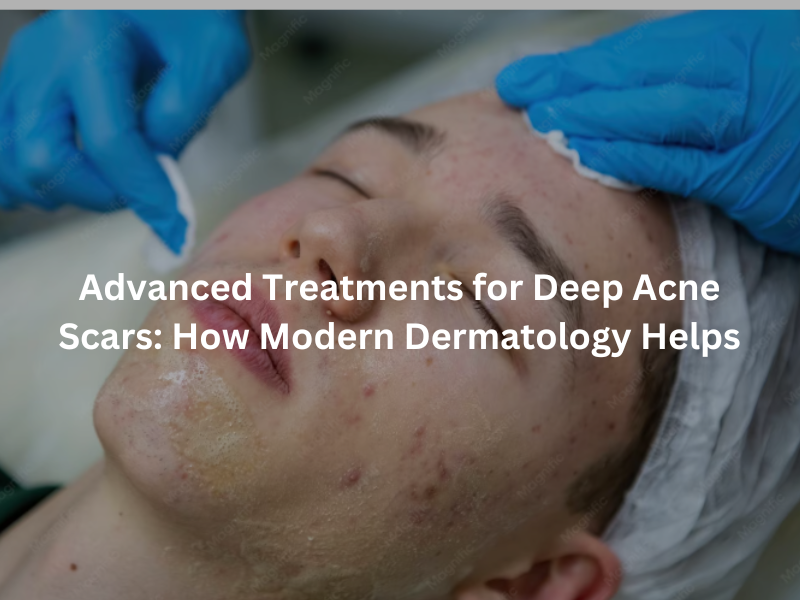
Acne is one of the most common skin concerns, but the scars it leaves behind can remain long after breakouts have healed. Deep acne scars can affect your skin’s texture and your confidence, making many people search for effective acne scars treatment options. While skincare products may help improve mild blemishes, they are often not enough for deep scars.
Thanks to modern dermatology, advanced procedures can significantly improve the appearance of acne scars and restore smoother, healthier skin. If you are struggling with persistent acne scars, seeking professional acne treatment and scar management from an experienced dermatologist can make a noticeable difference.
What Causes Deep Acne Scars?
Deep acne scars develop when severe acne damages the deeper layers of the skin. As the skin heals, collagen production may become uneven, resulting in permanent indentations or raised scars.
Several factors increase the risk of deep acne scars, including:
- Severe inflammatory acne
- Delayed acne treatment
- Picking or squeezing pimples
- Genetic factors
- Improper healing of the skin
Treating acne early is one of the best ways to prevent permanent scarring.
Types of Deep Acne Scars
Different scar types require different treatment approaches. A dermatologist carefully evaluates the scars before recommending the most suitable procedure.
Ice Pick Scars
Ice pick scars are narrow, deep, and extend into the skin. These scars are among the most difficult to treat and usually require advanced dermatological procedures.
Boxcar Scars
Boxcar scars are broad depressions with defined edges. They commonly appear on the cheeks and temples and create an uneven skin surface.
Rolling Scars
Rolling scars give the skin a wavy appearance because fibrous bands pull the skin downward. Specialized treatments help release these bands and smooth the skin.
Hypertrophic Scars
These scars appear raised due to excess collagen production during healing. They are more commonly seen on the chest, shoulders, and back.
Why Professional Acne Scar Treatment Is Important
Many creams claim to reduce acne scars, but deep scars usually require medical intervention. Professional acne scars treatment works beneath the skin’s surface to stimulate collagen production, improve texture, and encourage healthy skin regeneration.
A dermatologist assesses your skin type, scar severity, and medical history before creating a personalized treatment plan. This customized approach provides better and longer lasting results than self treatment.
Advanced Treatments for Deep Acne Scars
Modern dermatology offers several highly effective procedures for treating deep acne scars. Often, combining multiple treatments provides the best outcome.
Fractional CO2 Laser Resurfacing
Fractional CO2 laser is considered one of the most effective options for deep acne scars. It creates microscopic treatment zones that stimulate collagen production and encourage new skin formation.
Benefits include:
- Reduces deep acne scars
- Improves skin texture
- Stimulates natural collagen production
- Enhances overall skin quality
- Offers long lasting improvement
Several sessions may be recommended depending on the severity of the scars.
Microneedling with Radiofrequency
Microneedling combined with radiofrequency energy reaches deeper skin layers and promotes collagen remodeling. This advanced procedure improves scar depth while keeping downtime minimal.
It is suitable for many skin types and provides gradual, natural looking improvement.
Subcision
Subcision is especially effective for rolling acne scars. During the procedure, a fine needle is inserted beneath the skin to release the fibrous bands responsible for the depressed appearance.
Once released, the skin gradually becomes smoother and more even.
Subcision is often combined with fillers or laser therapy for enhanced results.
Chemical Peels
Medical grade chemical peels remove damaged skin cells and stimulate new skin growth. Depending on the depth of the scars, your dermatologist may recommend superficial, medium, or deeper peels.
Chemical peels also improve post acne pigmentation and overall skin tone.
Dermal Fillers
Dermal fillers restore volume beneath depressed scars, making them appear less noticeable almost immediately.
Although fillers provide temporary improvement, they can produce excellent cosmetic results when combined with other acne scar treatments.
PRP Therapy
Platelet Rich Plasma therapy uses growth factors from your own blood to stimulate healing and collagen production. PRP is frequently combined with microneedling or laser resurfacing to improve treatment outcomes and speed recovery.
Patients often notice smoother, healthier looking skin after multiple sessions.
Punch Excision
Punch excision is commonly recommended for isolated ice pick scars. The scar is carefully removed, and the skin is closed with a tiny stitch, resulting in a much less noticeable mark after healing.
Combination Treatments Provide Better Results
Every acne scar is different, which is why dermatologists often combine multiple procedures to achieve the best results.
Common treatment combinations include:
- Fractional CO2 laser with PRP therapy
- Subcision with dermal fillers
- Microneedling with radiofrequency
- Chemical peels combined with laser treatments
A personalized treatment plan addresses different scar types more effectively than a single procedure alone.
How Many Treatment Sessions Are Needed?
The number of sessions depends on several factors, including:
- Scar type
- Scar depth
- Skin type
- Individual healing response
- Selected treatment method
Some patients notice improvement after one session, while deeper scars may require three to six sessions or more for optimal results.
Recovery After Acne Scar Treatment
Recovery varies depending on the procedure performed.
Some temporary effects may include:
- Mild redness
- Swelling
- Skin sensitivity
- Light peeling
These effects usually resolve within a few days to one week. Following your dermatologist’s aftercare instructions and wearing sunscreen daily help ensure proper healing and better results.
How to Prevent Future Acne Scars
Preventing scars begins with treating active acne promptly.
Helpful tips include:
- Never squeeze or pick pimples.
- Seek professional acne treatment early.
- Follow a dermatologist prescribed skincare routine.
- Apply sunscreen every day.
- Use gentle skincare products.
- Attend follow up appointments regularly.
Proper acne management significantly lowers the risk of permanent scarring.
Why Choose Emara Skin Clinic for Acne Scar Treatment?
When it comes to advanced acne scars treatment, choosing the right dermatologist is essential. At Emara Skin Clinic, patients receive personalized care using the latest dermatology technologies for both active acne treatment and scar correction.
Under the expert guidance of Dr. Mriganka Mehra, every treatment plan is customized according to the patient’s skin type, scar pattern, and treatment goals. From laser resurfacing and microneedling to PRP therapy and combination procedures, the focus is on delivering safe, effective, and natural looking results.
Conclusion
Deep acne scars do not have to be permanent. Modern dermatology offers advanced solutions that can significantly improve skin texture, reduce scar visibility, and restore confidence. Treatments such as Fractional CO2 Laser, Microneedling with Radiofrequency, Subcision, PRP Therapy, Chemical Peels, Dermal Fillers, and Punch Excision provide effective options for different types of scars.
If you are struggling with deep acne scars, book your consultation today to explore the best treatment options for your skin. Early care can help improve skin texture, reduce visible scarring, and restore healthier, smoother-looking skin.
Share :