
Thread Lift vs Surgical Facelift: How Do the Results, Cost & Recovery Compare?
AI OVERVIEW:
Thread lift and surgical facelift are two options for improving facial sagging and signs of ageing. Dr. Mriganka Mehra at Emara Skin Clinic provides personalised guidance to help patients understand the suitable treatment based on their skin condition, facial structure, and desired results.
Table of Contents
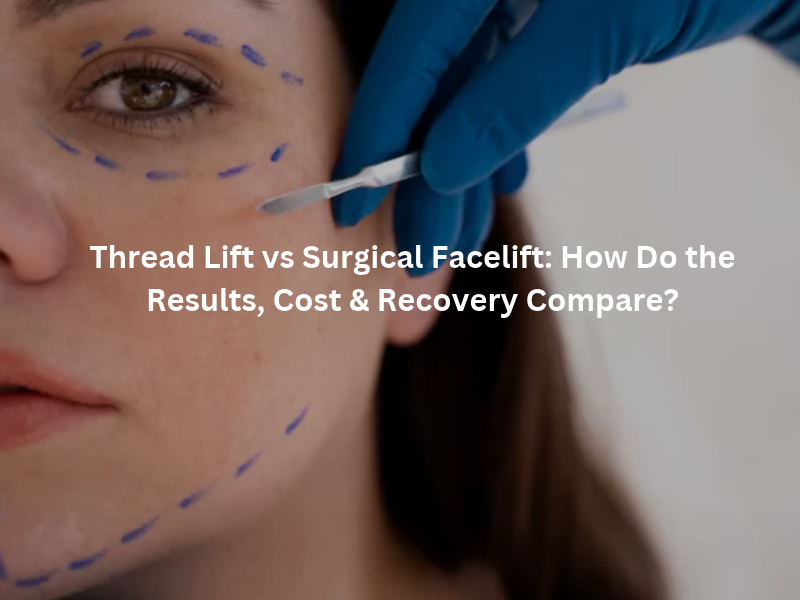
Facial ageing can gradually change the way the cheeks, jawline, and neck look. As skin loses elasticity, sagging, fine lines, and jowls may become more noticeable. For people considering facial rejuvenation, a thread lift and surgical facelift are two commonly discussed options.
Although both treatments aim to improve facial sagging, they are quite different in terms of technique, results, recovery, cost, and longevity. Understanding these differences can help you discuss your expectations and treatment goals more clearly with a qualified professional.
Thread Lift vs Surgical Facelift: What Is the Difference?
The main difference between the two procedures is how they address facial laxity.
A thread lift is a minimally invasive procedure that uses dissolvable threads to provide a lifting effect in selected areas. It generally involves smaller entry points and requires less downtime.
A surgical facelift is a more extensive procedure. It can involve repositioning deeper facial tissues and removing excess skin to improve sagging and redefine facial contours.
The appropriate option depends on the degree of skin laxity, facial structure, skin quality, and the type of result a person wants to achieve.
How Do the Results Compare?
Results are one of the most important factors to consider when choosing between a thread lift and a surgical facelift.
A thread lift generally provides a subtle and relatively temporary lifting effect. It may improve the appearance of mild sagging and create better definition around areas such as the cheeks and jawline. Collagen stimulation associated with some thread materials may also contribute to gradual improvements in skin firmness.
A surgical facelift can address more pronounced facial sagging. By working with deeper tissues and removing excess skin when appropriate, it can create a more significant improvement in facial contours.
However, individual results vary. Factors such as age, skin elasticity, lifestyle, genetics, and the treatment technique can influence the outcome.
How Long Do the Results Last?
The longevity of results is another major difference.
Thread lift results are temporary because the threads gradually dissolve. The duration of visible improvement varies depending on the type of threads used, the treatment area, individual skin characteristics, and the natural ageing process.
A surgical facelift generally provides longer-lasting results. However, it does not stop the skin from ageing. Over time, natural changes in skin elasticity and facial tissues will continue.
For this reason, neither treatment should be viewed as a permanent way to prevent future signs of ageing.
Thread Lift vs Surgical Facelift: Recovery Time
Recovery can be an important consideration, particularly for people with work, family, or social commitments.
A thread lift usually involves a shorter recovery period compared with surgery. Temporary swelling, bruising, tenderness, or tightness can occur. Your doctor may recommend avoiding strenuous exercise and certain facial movements during the early recovery period.
A surgical facelift requires more healing time because it involves incisions and manipulation of facial tissues. Bruising and swelling can occur during the initial recovery period, and patients need to follow their surgeon’s postoperative instructions carefully.
The actual recovery period can vary depending on the procedure performed and the individual’s healing process.
Thread Lift vs Surgical Facelift: Cost
Cost can vary significantly for both procedures.
A thread lift is generally less expensive initially because it is minimally invasive and does not involve the same level of surgical preparation, facility costs, or recovery requirements.
A surgical facelift typically involves a higher initial cost. The overall expense may include the surgeon’s fees, anaesthesia, operating facility, medications, follow-up appointments, and other associated care.
However, comparing only the initial price may not provide the complete picture. Because thread lift results are temporary, some people may consider additional treatments over time. A surgical facelift generally involves a larger upfront investment but can provide longer-lasting improvement.
Which Treatment Is Right for You?
There is no single procedure that is suitable for everyone.
A thread lift may be considered when you have mild to moderate sagging and want a minimally invasive approach with less downtime. It may also appeal to people who prefer a more subtle change.
A surgical facelift may be more appropriate when there is significant skin laxity, pronounced jowling, or more advanced facial ageing. It can provide a more comprehensive change to facial contours.
If you are considering a Thread Lift Treatment in Delhi, your skin condition, degree of sagging, facial anatomy, age, and expectations should all be assessed before choosing a treatment.
A consultation with a qualified medical professional can help determine which approach is appropriate for you.
Are Thread Lifts and Facelifts Safe?
Both procedures have potential risks, although the type and level of risk differ.
Thread lift complications can include infection, bruising, swelling, asymmetry, thread visibility, dimpling, or discomfort. Surgical facelifts may involve risks such as bleeding, infection, scarring, nerve-related complications, asymmetry, or reactions to anaesthesia.
Choosing a qualified and experienced medical professional is an important part of reducing potential complications. You should also discuss your medical history, medications, previous procedures, and expectations during your consultation.
Final Thoughts
A thread lift and surgical facelift can both be used for facial rejuvenation, but they are designed for different levels of facial aging and involve different treatment approaches.
A thread lift can offer a subtle improvement with relatively limited downtime, while a surgical facelift can address more significant sagging and provide a more comprehensive and longer-lasting change. Cost, recovery, expected longevity, and potential risks should all be considered before making a decision.
A consultation with a Best Dermatologist in Delhi can help you understand which option may be appropriate for your facial concerns and expectations.
For personalised guidance regarding facial rejuvenation options, Dr. Mriganka Mehra at Emara Skin Clinic can assess your concerns and discuss suitable treatment approaches based on your individual needs.
Share :